
 DigiSim Relay Lab
See what computing is really made of
Digital logic, built from the clicking relays that ran the first computers — and simulated for real, right here.
Free to start · no login · runs in your browser
Same relay, wired a little more cleverly
Everything a computer does is this one trick, repeated. Flip each circuit — every contact click is the real recorded sound.
Following the arc of Charles Petzold's Code
What you open
The Relay Lab is a full editor: drag battery, switch, relay and lamp onto the canvas, wire them up, and a real DC solver computes every wire. Below — the actual product surface, live.
-
A real DC circuit
Every wire solved with Ohm's and Kirchhoff's laws — it computes because the physics works.
-
Mechanically faithful
Armatures pull in with authentically recorded relay clicks. Hear it think.
-
25 Blueprints
From one relay to a binary counter — every chapter of the story, pre-built and flippable.
-
Runs in your browser
No install, no login, no setup — open a Blueprint and start flipping.
Start free. Unlock the summit.
The free Lab is genuinely useful — the unlock is one payment, not a subscription.
Free
$0- Circuits with up to 6 relays
- 18 of the 25 Blueprints
- All gates, the full adder, latches, the oscillator
- No account needed
Relay Lab unlock
$12.99 one-time- Unlimited relays
- All 25 Blueprints — incl. the 8-bit adder and binary counter
- Export your circuits as .relay files
- One-time purchase — about the price of the Code paperback
Learn it the way it was invented
The Blueprints follow Charles Petzold's Code — the same arc from a telegraph relay to a working computer. We wrote an 18-part series that walks every rung, each with a live circuit inside.
-
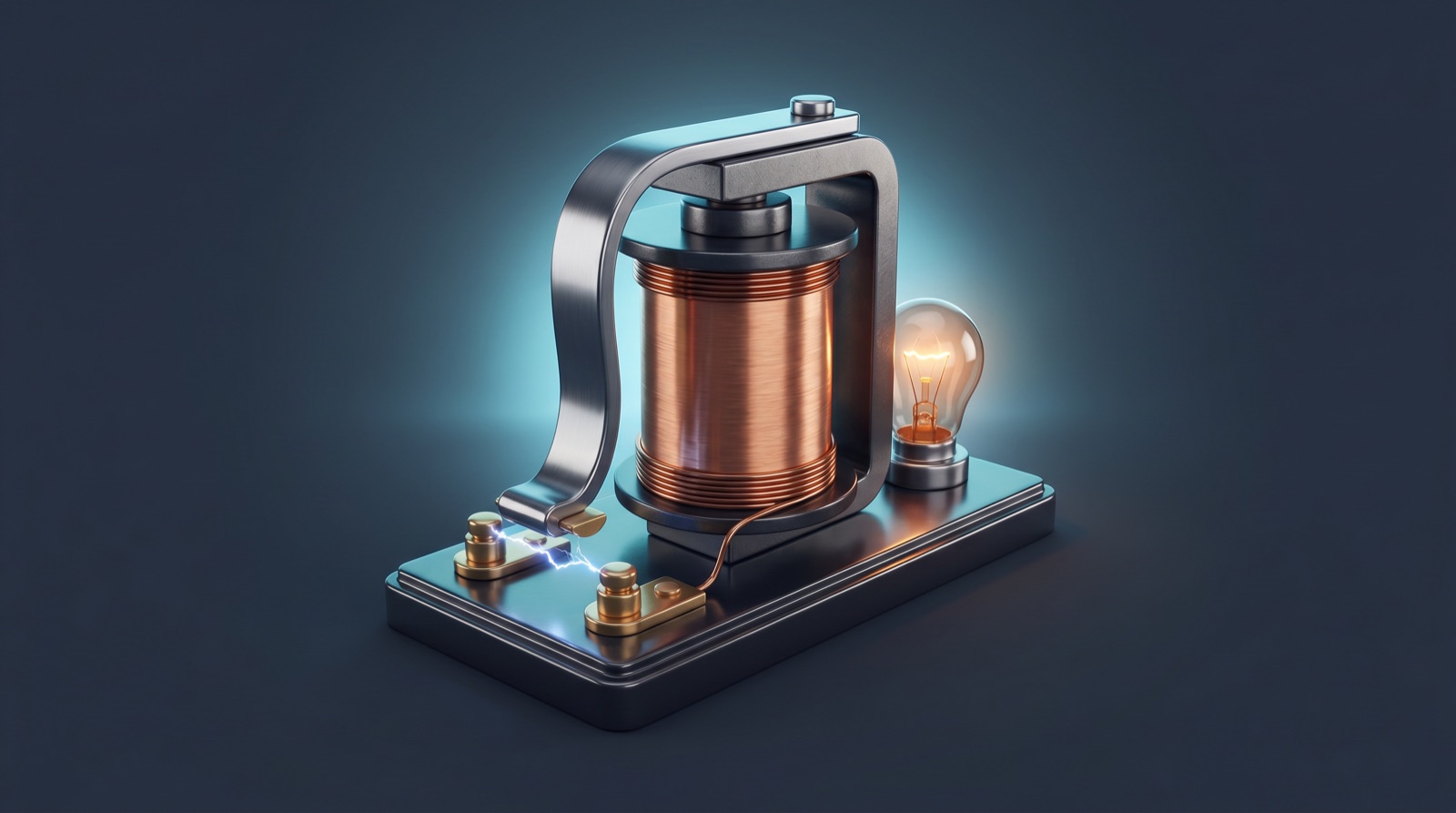
How a Relay Works: The Click That Built Modern Computing
How does a relay actually work? Explore the electromechanical switch behind every computer — from the telegraph to the logic gate — and toggle a live relay right in your browser.
-
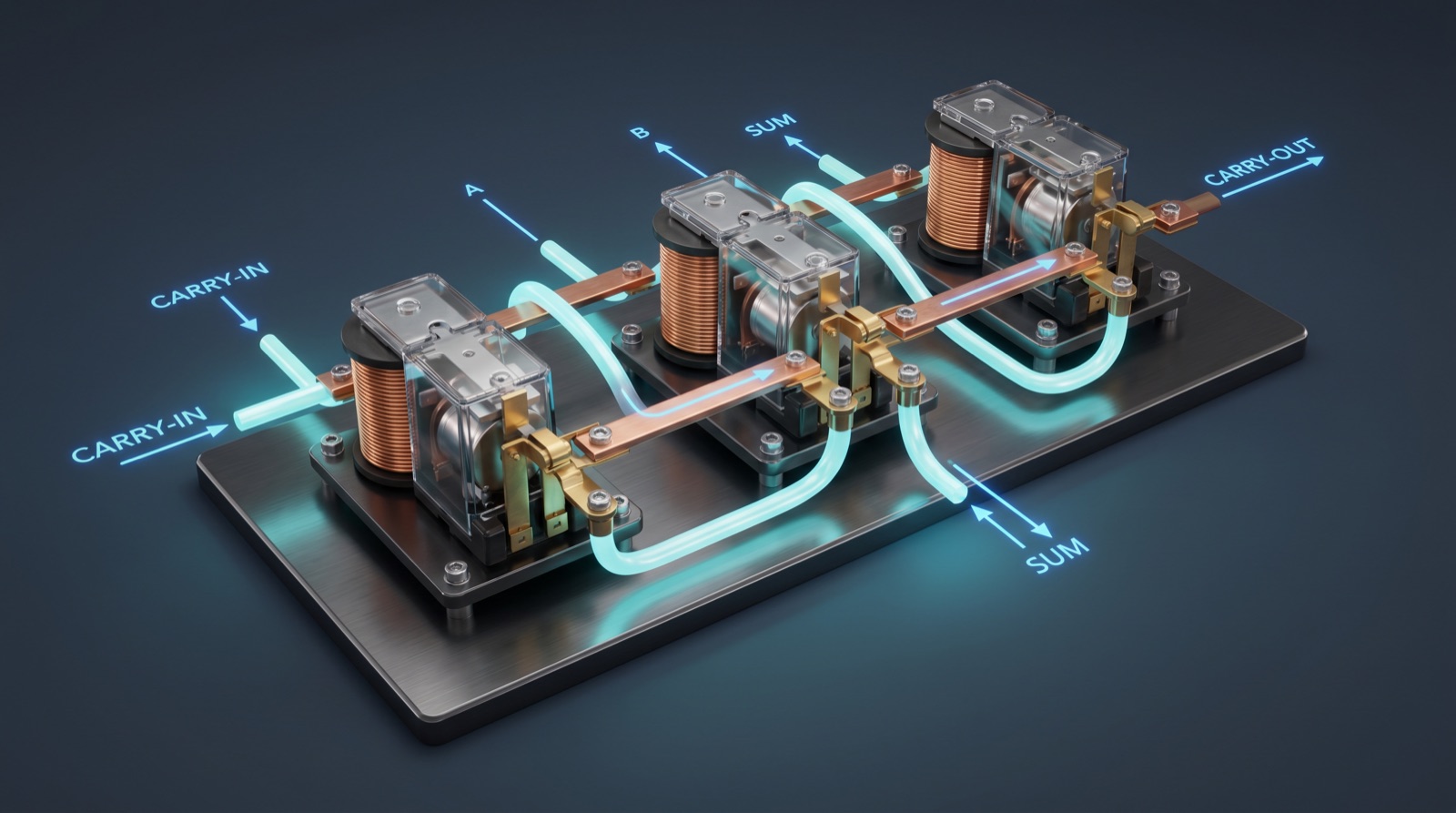
Full Adder from Relays: Carry the One — and Add Any Number
A full adder takes A, B, and carry-in — producing sum and carry-out. Chain N of them for N-bit arithmetic. George Stibitz built the first relay adder in 1937.
-
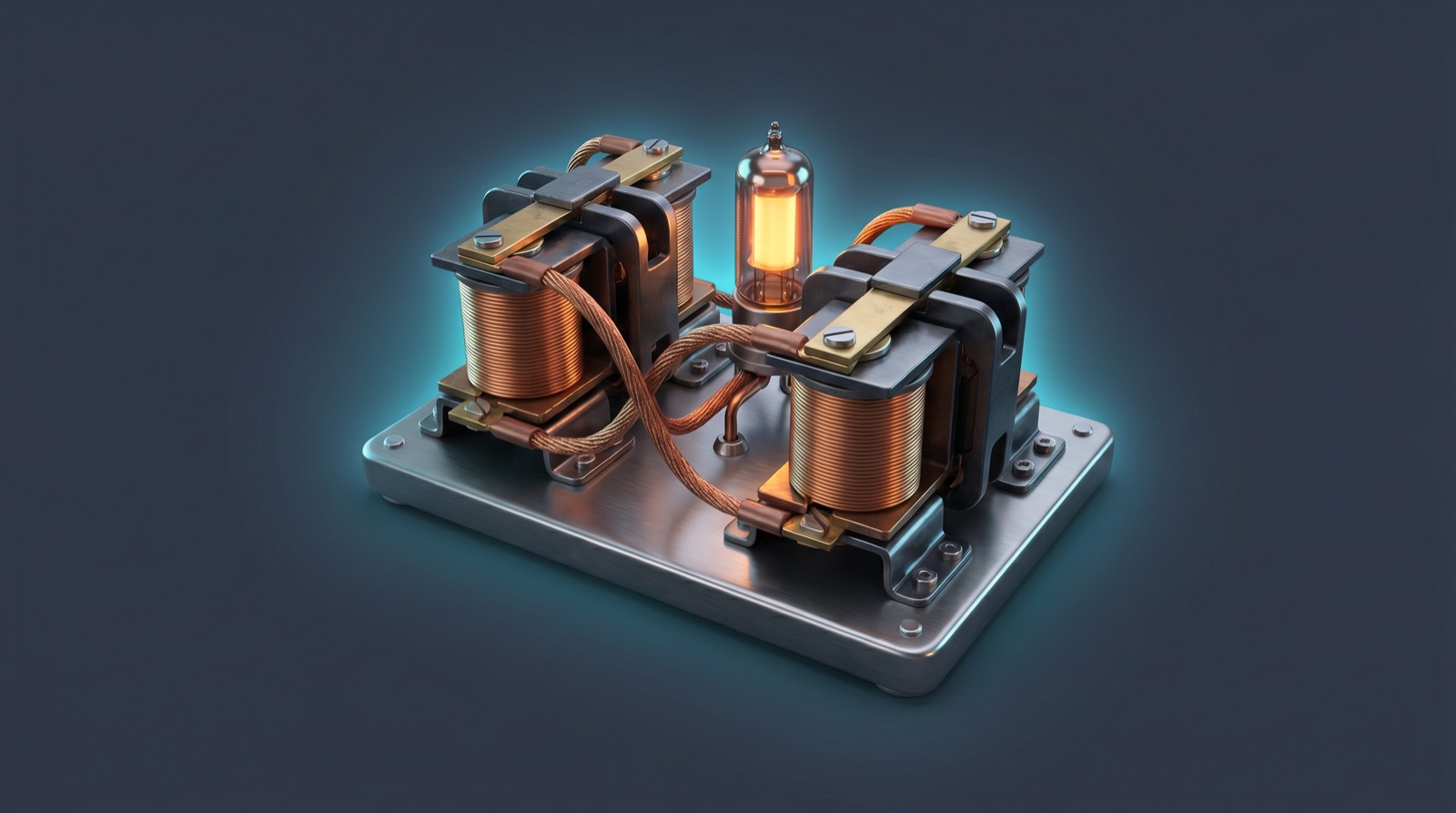
The RS Latch: How a Circuit Remembers — The Birth of Computer Memory
An RS latch uses feedback to hold a bit after inputs vanish — the first circuit with memory. From Eccles and Jordan's 1918 bistable to every byte of RAM.
Questions, answered
What do I get free, exactly?
Circuits with up to 6 relays and 18 of the 25 Blueprints — all gates, the full adder, latches and the oscillator — with no account. The $12.99 one-time unlock adds unlimited relays, all 25 Blueprints (8-bit adder, binary counter) and .relay export.
Do I need to install anything?
No. The Lab runs in any modern browser on desktop or mobile. Open it and flip a switch.
Is it really simulated, or just animated?
Really simulated: every wire is solved as a DC circuit (Ohm + Kirchhoff), relays actuate on mechanical timescales, and the clicks are recordings of real relays.
Refunds? Classroom use?
The unlock is covered by our standard refund policy. For classrooms, the free tier needs no accounts — every student can open the Lab instantly. Refund policy
Hear a computer think
Open the Relay Lab and flip your first gate to life.
Open the Relay Lab Explore DigiSim Logic Lab